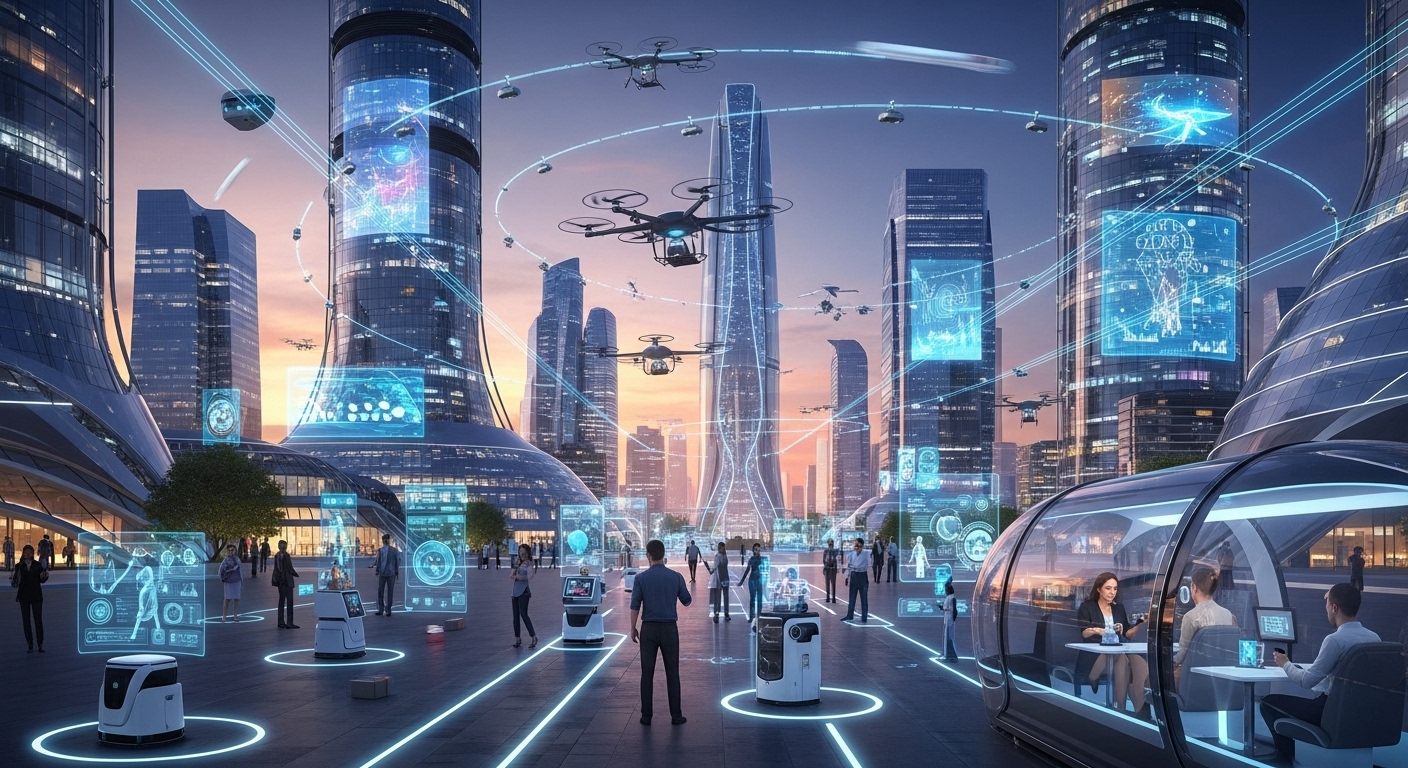
Technology is evolving at a pace never before seen in human history. With each passing year, new breakthroughs and innovations are changing the way we live, work, and interact with the world. From artificial intelligence and quantum computing to the development of smarter cities, these technologies are not just influencing the present; they are actively shaping the future. In this blog, we will take a deep dive into some of the most exciting and impactful technological trends that are defining the next chapter of our global evolution.
1. Artificial Intelligence: Redefining Human-Machine Interaction
Artificial intelligence (AI) is at the forefront of the technological revolution. AI systems are no longer confined to complex research labs; they are now integrated into everyday life. From virtual assistants like Siri and Alexa to AI-powered tools in healthcare, finance, and education, AI is enhancing human capabilities and offering solutions to problems that were once insurmountable.
In healthcare, AI is improving diagnostics and treatment recommendations. Machine learning algorithms can now analyze medical data more efficiently than human doctors, helping detect conditions such as cancer and heart disease at earlier, more treatable stages. In the finance sector, AI is being used for predictive analytics, fraud detection, and automated trading, reshaping how investments are made. As AI technology continues to mature, its potential to revolutionize virtually every industry is limitless, offering more intelligent systems that can make complex decisions and solve problems faster than ever before.
2. Blockchain: Transforming Trust in the Digital Age
Blockchain technology has emerged as one of the most disruptive innovations of the digital age. Originally developed to support cryptocurrencies like Bitcoin, blockchain’s true potential lies in its ability to provide a decentralized, transparent, and immutable ledger. This ledger can be used for secure transactions without the need for intermediaries such as banks or government institutions.
The power of blockchain goes beyond cryptocurrencies. In supply chain management, blockchain can track the journey of products from origin to consumer, ensuring transparency and authenticity. It is also being explored for use in voting systems, where its transparency and immutability can help reduce fraud and ensure election integrity. Additionally, blockchain is transforming industries like real estate, healthcare, and even entertainment by streamlining transactions and improving data security.
3. 5G Networks: Ushering in a New Era of Connectivity
The introduction of 5G networks is set to drastically change the way we connect to the internet and communicate with one another. With faster speeds, lower latency, and the ability to support an exponentially greater number of connected devices, 5G promises to take connectivity to new heights.
This ultra-fast internet service will enable innovations that weren’t possible with previous generations of wireless technology. Autonomous vehicles will be able to communicate with each other and with traffic systems in real time, reducing accidents and optimizing traffic flow. In healthcare, 5G will enable remote surgeries and telemedicine with virtually no lag, offering a new level of access to care, especially in rural or underserved areas. Moreover, the widespread use of 5G will help accelerate the development of the Internet of Things (IoT), connecting everything from home appliances to industrial machinery in a seamless, intelligent network.
4. Quantum Computing: Unlocking the Power of the Universe’s Code
Quantum computing is another breakthrough that promises to revolutionize our world. Traditional computers rely on bits, which represent data as either 0 or 1. Quantum computers, however, use quantum bits, or qubits, that can exist in multiple states at once. This allows quantum computers to process vast amounts of data simultaneously, making them exponentially more powerful than classical computers.
While quantum computing is still in its infancy, its potential applications are staggering. In fields like cryptography, quantum computers could break existing encryption techniques, forcing the development of new, more secure systems. In medicine, they could simulate complex molecular interactions at a scale and speed that classical computers cannot match, helping to accelerate the discovery of new drugs and treatments. As quantum computing technology advances, it is expected to tackle problems that are currently beyond the capabilities of today’s most powerful supercomputers.
5. Virtual and Augmented Reality: Blurring the Line Between Physical and Digital
Virtual Reality (VR) and Augmented Reality (AR) are technologies that are transforming the way we experience the digital world. VR immerses users in a fully digital environment, while AR overlays digital elements onto the real world. These technologies are already making waves in gaming and entertainment, but their potential stretches far beyond these areas.
In education, VR can transport students to historical events, faraway places, or even inside the human body for an immersive learning experience. In healthcare, AR is being used by surgeons to enhance precision during procedures by overlaying important data directly onto a patient’s body. Furthermore, industries such as retail and real estate are exploring VR and AR to give customers virtual walkthroughs of products or properties, enhancing their buying experience. As these technologies become more advanced, they are expected to have an even greater impact on our daily lives, changing the way we work, learn, shop, and socialize.
6. Biotechnology: Innovating Health and Extending Human Potential
Biotechnology is another field experiencing rapid innovation. From gene editing technologies like CRISPR to the development of personalized medicine, the potential to treat and even cure genetic diseases has never been more promising. Scientists are now able to modify genes with unprecedented accuracy, allowing them to potentially correct genetic disorders before they manifest.
In addition to gene editing, biotechnology is making strides in regenerative medicine, where stem cells and tissue engineering could one day lead to the growth of replacement organs and tissues. Personalized medicine, which tailors treatments to an individual’s genetic profile, is already improving patient outcomes by offering more precise and effective care. These advances in biotechnology are not just enhancing healthcare—they are pushing the boundaries of human potential, offering new ways to treat illnesses and extend life expectancy.
7. Sustainable Technologies: Innovating for a Greener Tomorrow
As the world faces the growing threat of climate change, sustainable technologies are emerging as a vital solution. Innovations in clean energy, energy storage, and waste management are helping reduce our environmental footprint while ensuring a sustainable future for generations to come.
Renewable energy sources like solar, wind, and geothermal power are becoming increasingly efficient and affordable, making it easier for individuals, businesses, and governments to transition away from fossil fuels. Advancements in battery technology are helping store energy more effectively, ensuring that renewable energy can be used even when the sun isn’t shining or the wind isn’t blowing. Electric vehicles (EVs) are gaining traction as battery life and charging infrastructure continue to improve, providing an environmentally friendly alternative to gasoline-powered cars. Additionally, sustainable technologies are being applied in agriculture, helping farmers reduce water use and minimize chemical fertilizers while still meeting global food demands.
Conclusion: The Future is Now
The technology we’re developing today is laying the foundation for a future that’s smarter, more efficient, and more interconnected. From artificial intelligence and blockchain to quantum computing and sustainable innovations, these trends are poised to reshape every aspect of society. However, with these advancements come important ethical considerations, as we must ensure that technology is developed and used in ways that benefit everyone.
As we continue to embrace the power of these technologies, it’s crucial to stay mindful of their potential impact on our jobs, privacy, and the environment. By doing so, we can ensure that technology will not only drive progress but also create a better, more equitable world for future generations. The future is bright, and the journey has only just begun.