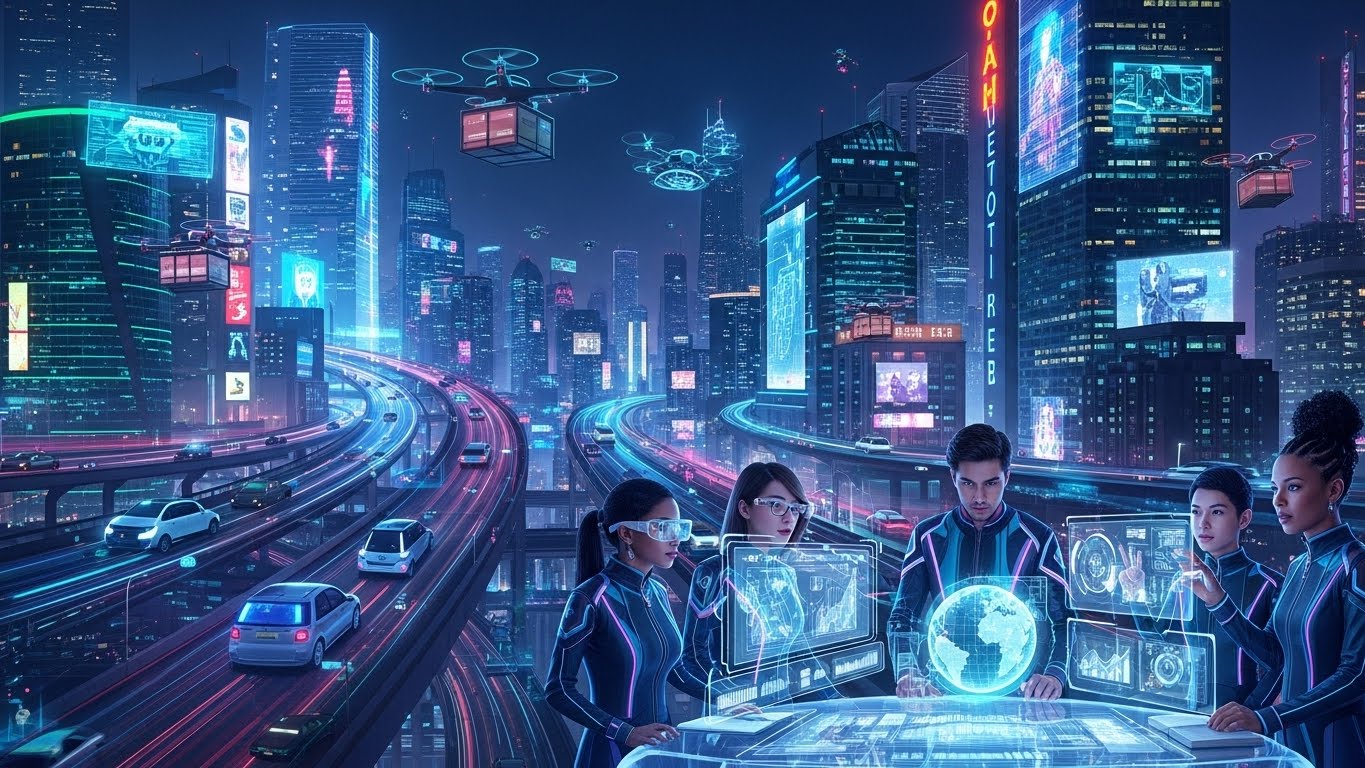
Technology has become the backbone of modern society, transforming how we communicate, work, learn, and live. From smartphones to artificial intelligence, technological advancements are not just tools—they are reshaping human potential and redefining the future. This article explores the evolution of technology, its impact on society, business, education, and the environment, as well as the challenges and opportunities it presents.
The Evolution of Technology
Technology has been evolving for thousands of years, from the invention of the wheel and tools in ancient civilizations to the Industrial Revolution, which mechanized production and transportation. The 20th century marked a rapid acceleration in innovation, introducing computers, the internet, and mobile devices that connected the world like never before.
Today, technology is advancing at an unprecedented pace. Artificial intelligence, robotics, biotechnology, and quantum computing are no longer futuristic concepts—they are actively shaping industries and daily life. Every innovation builds upon previous breakthroughs, creating a dynamic ecosystem that continuously reshapes society.
Technology and Communication
One of the most profound impacts of technology is in the way humans communicate. The invention of the telephone and later the internet allowed people to connect across continents instantly. Social media platforms have further transformed communication, enabling global interaction, idea sharing, and collaboration in real time.
Messaging apps, video conferencing, and collaborative online tools have changed personal relationships, professional collaboration, and education. Technology allows businesses to operate globally, families to stay connected across distances, and communities to share knowledge and resources seamlessly.
Impact on Education
Technology has revolutionized education, making learning more accessible, interactive, and personalized. Online courses, digital classrooms, and e-learning platforms enable students to learn at their own pace, regardless of geographic location.
Educational software uses adaptive learning algorithms to assess student performance and tailor lessons to individual needs. Virtual and augmented reality technologies allow immersive learning experiences, from exploring historical landmarks to conducting complex scientific experiments. Technology empowers both teachers and students to enhance engagement, creativity, and knowledge retention.
Business Transformation Through Technology
Modern businesses thrive on technology. Automation, data analytics, cloud computing, and artificial intelligence have reshaped industries, creating efficiency, innovation, and competitive advantage. Businesses can now analyze massive datasets to identify trends, optimize operations, and predict customer behavior.
E-commerce platforms have transformed retail, enabling companies to reach global markets with ease. Remote work technologies, including collaboration tools and video conferencing, have changed workplace dynamics, offering flexibility and new opportunities. Technology not only enhances productivity but also opens avenues for innovation and entrepreneurship.
Healthcare Advancements
Healthcare is one of the most transformative fields impacted by technology. Medical imaging, robotic surgery, wearable devices, and telemedicine have improved patient care, accuracy, and accessibility. AI-powered diagnostics can analyze symptoms and detect diseases earlier than traditional methods.
Genetic engineering and biotechnology are revolutionizing treatment approaches, offering personalized medicine tailored to individual genetic profiles. Remote monitoring devices and health apps allow patients to manage chronic conditions more effectively. Technology in healthcare saves lives, reduces costs, and enhances the overall quality of life.
The Role of Artificial Intelligence
Artificial intelligence is at the forefront of technological innovation. AI systems can perform tasks that traditionally required human intelligence, including language processing, decision-making, and pattern recognition. Applications range from virtual assistants and chatbots to self-driving cars and predictive analytics.
AI is transforming industries by improving efficiency, reducing errors, and enhancing decision-making. In manufacturing, AI optimizes production lines and predicts maintenance needs. In finance, it detects fraud and analyzes market trends. While AI offers immense opportunities, ethical considerations such as bias, privacy, and job displacement must be carefully managed.
Technology and the Environment
Technology plays a dual role in environmental sustainability. On one hand, industrialization and technological growth have contributed to pollution and resource depletion. On the other hand, technology offers innovative solutions to environmental challenges.
Renewable energy technologies, including solar, wind, and hydroelectric power, are reducing dependence on fossil fuels. Smart grids, energy-efficient buildings, and electric vehicles help mitigate carbon footprints. Environmental monitoring tools and data analytics assist in tracking climate change and optimizing conservation efforts. Technology enables us to tackle global environmental challenges with precision and innovation.
Entertainment and Digital Media
The entertainment industry has been transformed by technology. Streaming platforms, high-definition video, virtual reality, and gaming technologies have revolutionized content consumption and creation. Audiences can access movies, music, games, and interactive experiences anywhere, anytime.
Gaming technology has created new forms of interactive storytelling and social engagement. Augmented reality games, e-sports, and immersive VR experiences offer entertainment that blends creativity with technological sophistication. Technology democratizes content creation, giving artists, developers, and storytellers tools to reach global audiences.
Challenges of Rapid Technological Growth
Despite its benefits, rapid technological advancement presents challenges. Privacy concerns, cybersecurity threats, and data breaches pose significant risks. The digital divide creates inequality, as not all individuals or regions have equal access to modern technology.
Additionally, automation and AI may displace traditional jobs, creating economic and social challenges. Ethical considerations, including AI decision-making, genetic engineering, and surveillance, require careful regulation and societal dialogue. Balancing innovation with responsibility is critical for ensuring technology benefits everyone.
Technology and Social Change
Technology drives social change by influencing behavior, communication, and societal norms. Social media platforms have enabled movements for political change, awareness campaigns, and social activism. Technology allows marginalized voices to be heard and fosters global connectivity.
Digital platforms also encourage collaboration and knowledge sharing, enabling communities to tackle problems collectively. While technology can amplify positive change, it can also spread misinformation and foster division if not used responsibly. Understanding the societal impact of technology is essential for shaping a better future.
Future Trends in Technology
The future of technology promises even more groundbreaking advancements. Quantum computing has the potential to revolutionize data processing and problem-solving. Biotechnology and nanotechnology may redefine medicine, agriculture, and materials science. The integration of AI with robotics will continue to automate tasks across industries.
Smart cities, connected devices, and the Internet of Things will transform urban living, creating efficient, sustainable, and responsive environments. Space exploration and satellite technology will expand our understanding of the universe and offer new economic and scientific opportunities. The next era of technology will be defined by innovation, connectivity, and ethical responsibility.
Conclusion: Embracing a Technological Future
Technology has fundamentally changed the way we live, work, and interact. It enhances communication, education, healthcare, business, and entertainment, while also addressing complex challenges such as environmental sustainability and social connectivity. However, rapid technological growth also requires ethical consideration, inclusivity, and responsible innovation.
As we move forward, embracing technology with foresight and responsibility will be key to shaping a future that benefits all of humanity. Technology is not merely a tool; it is a force that expands human potential, drives progress, and connects the world in ways that were unimaginable just a few decades ago. The horizon of innovation is limitless, and how we navigate it will define the next era of human civilization.