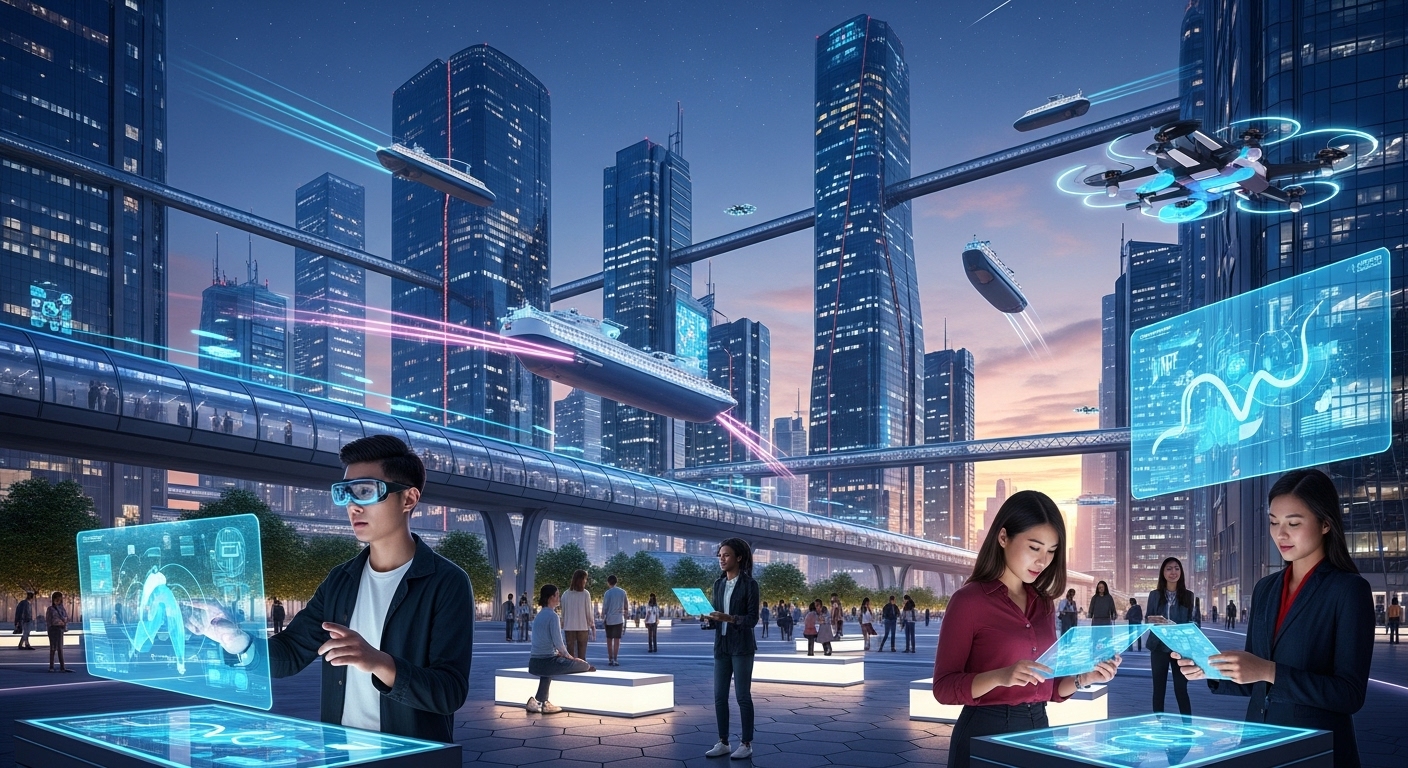
The world of technology is constantly evolving, bringing about changes that are reshaping industries, societies, and individual lives. From artificial intelligence to the internet of things, these innovations are transforming everything we do—from how we communicate to how we work, learn, and even entertain ourselves. As we look toward the future, it’s clear that technology will continue to play a crucial role in shaping our world. This blog explores some of the groundbreaking innovations that are defining tomorrow, and how they could impact our lives in ways we can only begin to imagine.
Artificial Intelligence: The Rise of the Machines
One of the most profound technological advancements in recent years has been the rise of artificial intelligence (AI). While AI has been a topic of science fiction for decades, it is now an integral part of our daily lives, from voice assistants like Siri and Alexa to AI-driven recommendations on platforms like Netflix and Spotify. However, AI’s potential extends far beyond these consumer-facing applications.
AI is already making a significant impact in industries like healthcare, finance, and transportation. In healthcare, AI algorithms are helping doctors make more accurate diagnoses and providing insights into patient data that were previously difficult to interpret. In finance, AI is being used to detect fraud, automate trading, and even offer personalized financial advice. Autonomous vehicles, powered by AI, are set to revolutionize the transportation industry, promising safer roads and more efficient travel.
As AI technology advances, its capabilities will only expand. Future developments may include AI systems that can learn autonomously, improving their performance without human intervention. While this presents incredible opportunities, it also raises ethical questions about job displacement, privacy, and the potential misuse of AI. As we embrace AI, it’s essential to consider both its benefits and its challenges in equal measure.
The Future of Communication: 5G and Beyond
Communication technologies have come a long way since the early days of the telephone. With the advent of 5G, the next generation of mobile networks, we are entering a new era of connectivity. 5G promises to deliver faster speeds, lower latency, and greater network reliability, paving the way for new applications and experiences.
One of the most significant impacts of 5G will be its ability to support the growing demand for connected devices. The Internet of Things (IoT) is rapidly expanding, with billions of devices—from smart thermostats to wearable fitness trackers—connected to the internet. With 5G, these devices will be able to communicate faster and more efficiently, leading to smarter homes, cities, and industries.
In addition to enhancing IoT, 5G will unlock new possibilities for augmented reality (AR) and virtual reality (VR) experiences. With low latency and high speeds, 5G will enable immersive VR experiences that feel incredibly real, transforming industries like gaming, entertainment, and education. Furthermore, 5G will enable remote work and collaboration in new ways, allowing for real-time video communication and collaboration that’s almost indistinguishable from in-person interactions.
Looking beyond 5G, the next frontier in communication technology is 6G, which promises even faster speeds and more advanced capabilities. While 6G is still in the early stages of development, it’s clear that the future of communication will be defined by ever-faster, more reliable connections.
Quantum Computing: A New Era of Processing Power
Quantum computing is another area of technology that promises to revolutionize industries in ways we can only begin to understand. Traditional computers process information using binary code, which represents data as either a 0 or a 1. In contrast, quantum computers use quantum bits, or qubits, which can represent both 0 and 1 simultaneously. This enables quantum computers to solve complex problems much faster than classical computers.
Although quantum computing is still in its infancy, researchers are already exploring its potential to tackle problems that are currently beyond the reach of even the most powerful supercomputers. For example, quantum computers could be used to model molecular structures, speeding up drug discovery and leading to new medical breakthroughs. In the field of cryptography, quantum computers could break current encryption methods, but they could also lead to the development of new, more secure encryption techniques.
While practical, large-scale quantum computing may still be years away, the potential applications are vast. Industries ranging from pharmaceuticals to finance and logistics could benefit from quantum computing’s unprecedented processing power. As this technology matures, it will undoubtedly play a key role in shaping the future of computing.
The Internet of Things: A More Connected World
The Internet of Things (IoT) refers to the growing network of physical devices connected to the internet, allowing them to communicate and exchange data. These devices can range from everyday objects, such as smart thermostats and fridges, to industrial machines used in manufacturing and logistics. As the number of connected devices continues to grow, IoT is becoming a driving force behind innovation in many industries.
In the home, IoT has already made significant strides. Smart home devices, such as voice-activated speakers, smart thermostats, and security cameras, are making life more convenient and energy-efficient. These devices allow users to control their homes remotely, monitor energy usage, and receive alerts in real-time.
In industries like manufacturing, agriculture, and healthcare, IoT is enabling new levels of efficiency and productivity. Sensors and connected devices can monitor machinery in real-time, predicting maintenance needs before a breakdown occurs. In agriculture, IoT devices can track weather patterns, soil conditions, and crop health, helping farmers optimize their operations. In healthcare, IoT devices like wearable health trackers can monitor patients’ vital signs, providing valuable data to doctors and enabling more personalized care.
As the IoT ecosystem continues to expand, the need for robust security and privacy measures will become even more critical. With billions of connected devices transmitting sensitive data, ensuring that this data remains secure will be a major challenge for the future.
Blockchain: Revolutionizing Trust and Security
Blockchain technology has gained significant attention in recent years, primarily due to its association with cryptocurrencies like Bitcoin. However, blockchain’s potential extends far beyond digital currencies. At its core, blockchain is a decentralized, transparent ledger that records transactions in a secure and immutable way.
One of the most promising applications of blockchain is in the realm of cybersecurity and data integrity. By using a distributed ledger system, blockchain can create tamper-proof records, making it ideal for applications where trust and security are paramount. For example, blockchain could be used to secure supply chains, ensuring that products are sourced ethically and that their journey from manufacturer to consumer is fully traceable.
In addition to security, blockchain has the potential to disrupt industries such as finance, healthcare, and real estate. In finance, blockchain can enable faster, more secure transactions without the need for intermediaries like banks. In healthcare, blockchain could be used to securely store patient data, giving individuals greater control over their health information while ensuring privacy. In real estate, blockchain could streamline property transactions, reducing fraud and paperwork.
While blockchain is still a relatively new technology, its potential to transform industries is vast. As it matures, it will likely play a key role in shaping the future of digital transactions and data security.
The Challenges and Ethical Implications of Emerging Technologies
While the potential benefits of these emerging technologies are immense, they also raise important ethical questions. The rise of AI, for example, has sparked debates about the potential for job displacement and the ethical use of machine learning algorithms. As AI systems become more autonomous, there is a growing concern about the need for transparency and accountability in their decision-making processes.
Similarly, the widespread adoption of IoT devices raises questions about privacy and data security. With more devices collecting and transmitting personal data, individuals may be at risk of surveillance and data breaches. Ensuring that IoT devices are secure and that users’ privacy is protected will be crucial as this technology continues to evolve.
Moreover, the development of technologies like quantum computing and blockchain raises concerns about their impact on existing systems and structures. For example, quantum computing could potentially break current encryption methods, making sensitive data vulnerable to cyberattacks. Blockchain’s decentralized nature could disrupt industries that rely on centralized control, challenging traditional business models.
As we embrace these new technologies, it is essential to consider their ethical implications and work toward creating solutions that benefit society as a whole.
Conclusion: The Future Is Now
The future of technology is unfolding before our eyes, and the innovations discussed above represent just a glimpse of what’s to come. From AI and quantum computing to IoT and blockchain, these technologies have the potential to revolutionize industries, improve our lives, and solve some of the world’s most pressing challenges.
However, as we move forward, it’s important to remain mindful of the ethical and societal implications of these advancements. By fostering innovation responsibly, we can ensure that technology continues to serve humanity in ways that are both beneficial and sustainable.
The journey toward a more connected, intelligent, and efficient future is just beginning. As we embrace the possibilities of tomorrow, we must be proactive in shaping a future that reflects our values and aspirations. Technology has the power to transform the world, and the choices we make today will determine how it shapes our lives in the years to come.