Introduction: The Dawn of a New Era
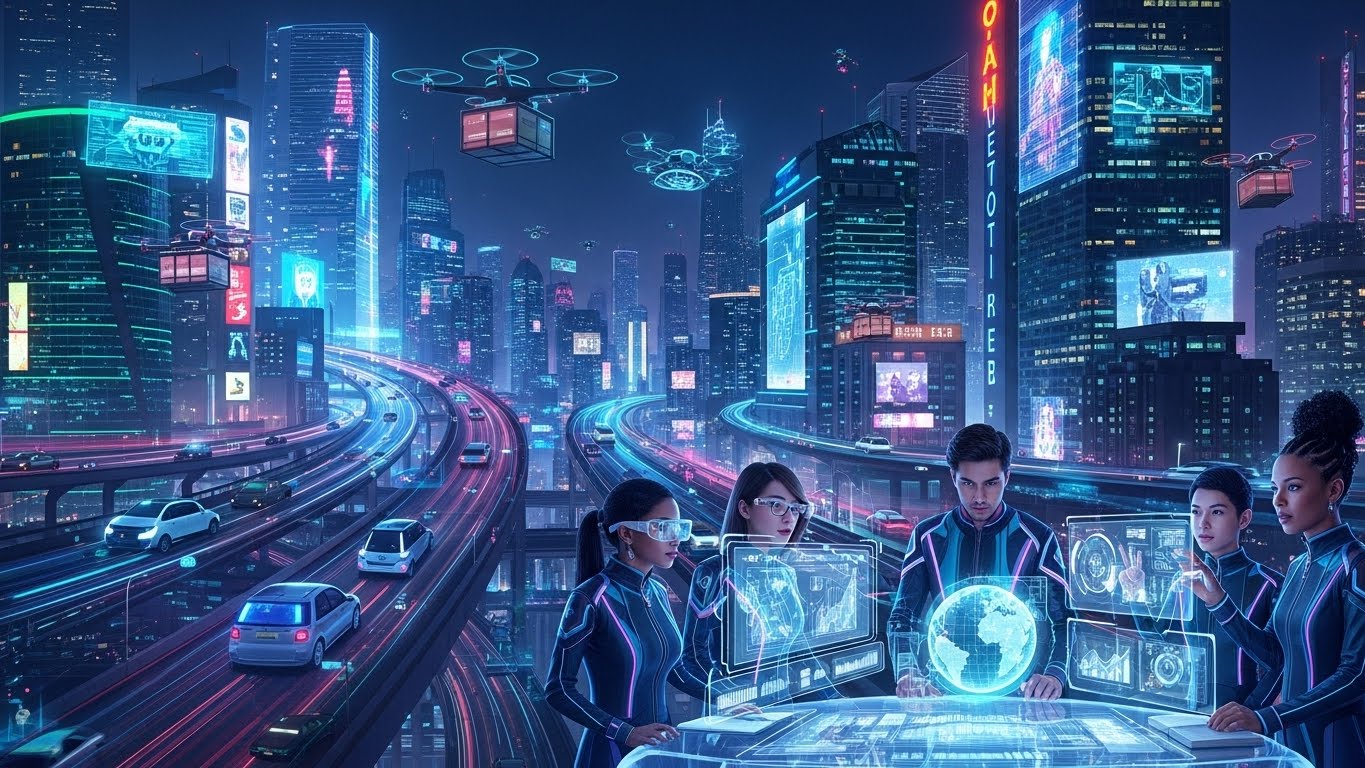
In the past decade, technology has advanced at a pace that was once unimaginable. From artificial intelligence to quantum computing, the innovations we are witnessing today are transforming every aspect of human life. The shift is not merely about convenience; it is about fundamentally redefining how we work, communicate, and even think. This technological revolution is silent, often invisible to the average person, yet its impact is profound. It challenges us to adapt, rethink traditional systems, and envision a future that merges human ingenuity with machine intelligence.
Artificial Intelligence: Beyond Automation
Artificial intelligence, or AI, is no longer a futuristic concept confined to science fiction. It is now a driving force in industries ranging from healthcare to finance. AI algorithms can analyze vast amounts of data with unprecedented speed, enabling smarter decision-making and predictive analytics. For instance, in healthcare, AI-powered diagnostic tools can detect diseases like cancer at an earlier stage, often with higher accuracy than human practitioners. In business, AI optimizes supply chains, forecasts demand, and personalizes customer experiences. The true potential of AI lies not only in automation but in augmenting human intelligence, enabling people to focus on creative and strategic tasks while machines handle repetitive processes.
The Rise of Quantum Computing
While classical computers process information using bits that are either 0 or 1, quantum computers leverage qubits, which can exist in multiple states simultaneously. This fundamental difference allows quantum machines to perform calculations at speeds that dwarf today’s most powerful supercomputers. The implications are enormous. Problems that would take classical computers millions of years to solve could be completed in mere hours by quantum systems. Industries such as cryptography, pharmaceuticals, and climate modeling stand to benefit the most. Despite being in its nascent stage, quantum computing promises to revolutionize how we solve some of the world’s most complex challenges.
Blockchain Beyond Cryptocurrency
Most people associate blockchain technology with cryptocurrencies like Bitcoin, but its potential extends far beyond digital money. At its core, blockchain is a decentralized ledger that ensures transparency, security, and immutability of data. This technology is being explored for applications such as supply chain management, voting systems, and healthcare records. For instance, in logistics, blockchain can track the origin and journey of goods, reducing fraud and ensuring ethical sourcing. In healthcare, patient records can be securely shared across institutions while maintaining privacy. Blockchain’s promise lies in its ability to create trust in a digital world where traditional verification methods are increasingly obsolete.
The Internet of Things: A Connected World
The Internet of Things, or IoT, is transforming everyday objects into intelligent devices capable of collecting and sharing data. From smart homes that optimize energy use to industrial sensors that monitor machinery in real time, IoT is creating a connected ecosystem that enhances efficiency and convenience. However, this interconnectedness also presents challenges, particularly in cybersecurity. As more devices come online, the potential for breaches and data misuse increases. Addressing these challenges requires not only robust security protocols but also public awareness and responsible design practices. The future will likely see IoT expanding into areas such as smart cities, autonomous transportation, and personalized healthcare, fundamentally altering the way we live and interact with our environment.
5G and the Future of Connectivity
The rollout of 5G networks marks a significant leap in connectivity, offering faster speeds, lower latency, and the capacity to support billions of devices simultaneously. This advancement is critical for enabling other emerging technologies, including autonomous vehicles, remote surgery, and augmented reality experiences. Unlike previous generations of mobile networks, 5G is not just about faster downloads; it is about creating an infrastructure capable of supporting a highly connected, data-driven world. With 5G, smart factories can operate with real-time precision, and cities can implement advanced traffic management systems, reducing congestion and environmental impact.
Augmented Reality and Virtual Reality: Redefining Experience
Augmented reality (AR) and virtual reality (VR) are no longer limited to gaming and entertainment. These technologies are increasingly used in education, healthcare, and professional training. AR overlays digital information onto the physical world, enhancing our perception and interaction with our environment. VR, on the other hand, immerses users in entirely virtual environments, providing experiences that were previously impossible. In medical training, VR allows surgeons to practice complex procedures without risk, while AR can assist in real-time operations by providing critical data overlays. As hardware becomes more affordable and software more sophisticated, the line between physical and digital experiences will continue to blur.
Sustainable Technology: Innovation with Responsibility
As technology advances, so does the responsibility to use it sustainably. Emerging technologies have the potential to address environmental challenges, from renewable energy solutions to smart grids and climate modeling. For example, AI can optimize energy consumption in buildings, reducing waste and emissions. Advances in battery technology and energy storage are making renewable energy sources more viable and efficient. Furthermore, technologies such as carbon capture, precision agriculture, and electric transportation are directly contributing to a greener planet. Innovation, however, must be balanced with ethical considerations, ensuring that progress does not come at the expense of the environment or society.
Cybersecurity: Protecting the Digital Frontier
With the growing reliance on technology comes an increased risk of cyber threats. Cybersecurity has become a critical field, encompassing everything from protecting personal data to defending national infrastructure. Emerging technologies like AI and machine learning are being employed to detect and mitigate threats in real time, identifying patterns that humans might miss. However, as defensive measures improve, so do offensive tactics, creating an ongoing battle between security and vulnerability. Companies and individuals alike must prioritize digital hygiene, including strong authentication practices, encryption, and regular updates, to navigate an increasingly complex digital landscape safely.
Ethical Implications of Technology
Technology is a tool, and like any tool, its impact depends on how it is used. Ethical considerations must accompany technological innovation, particularly in areas like AI, genetic engineering, and data privacy. Questions about bias, accountability, and societal impact are central to responsible development. For example, AI algorithms trained on biased data can inadvertently reinforce inequalities, while genetic editing raises questions about consent and long-term consequences. Technology is not inherently good or bad; it is a reflection of human values. As we build the future, careful attention to ethics will ensure that progress benefits society as a whole rather than a select few.
The Future of Work: Humans and Machines in Harmony
One of the most visible impacts of technology is on the workplace. Automation and AI are reshaping industries, replacing repetitive tasks while creating opportunities for new kinds of employment. The future of work will likely involve collaboration between humans and machines, with an emphasis on creativity, problem-solving, and emotional intelligence. Lifelong learning will become essential, as workers adapt to evolving technologies and skill requirements. Organizations that embrace this shift can harness technology to enhance productivity and employee satisfaction, while those that resist may face disruption. The balance between human ingenuity and machine efficiency will define the workplace of tomorrow.
Conclusion: Embracing the Technological Future
We are living in an era of unprecedented technological transformation. Each innovation—whether AI, quantum computing, blockchain, IoT, or AR/VR—represents not only progress but also a set of challenges and responsibilities. The choices we make today will determine how technology shapes our society, economy, and environment in the years to come. Embracing this change requires curiosity, adaptability, and ethical mindfulness. By understanding and harnessing emerging technologies, we can create a future where human potential is amplified, societies are more equitable, and the planet is preserved. The silent revolution of technology is not something to fear; it is an opportunity to rethink what is possible and to redefine the human experience in extraordinary ways.