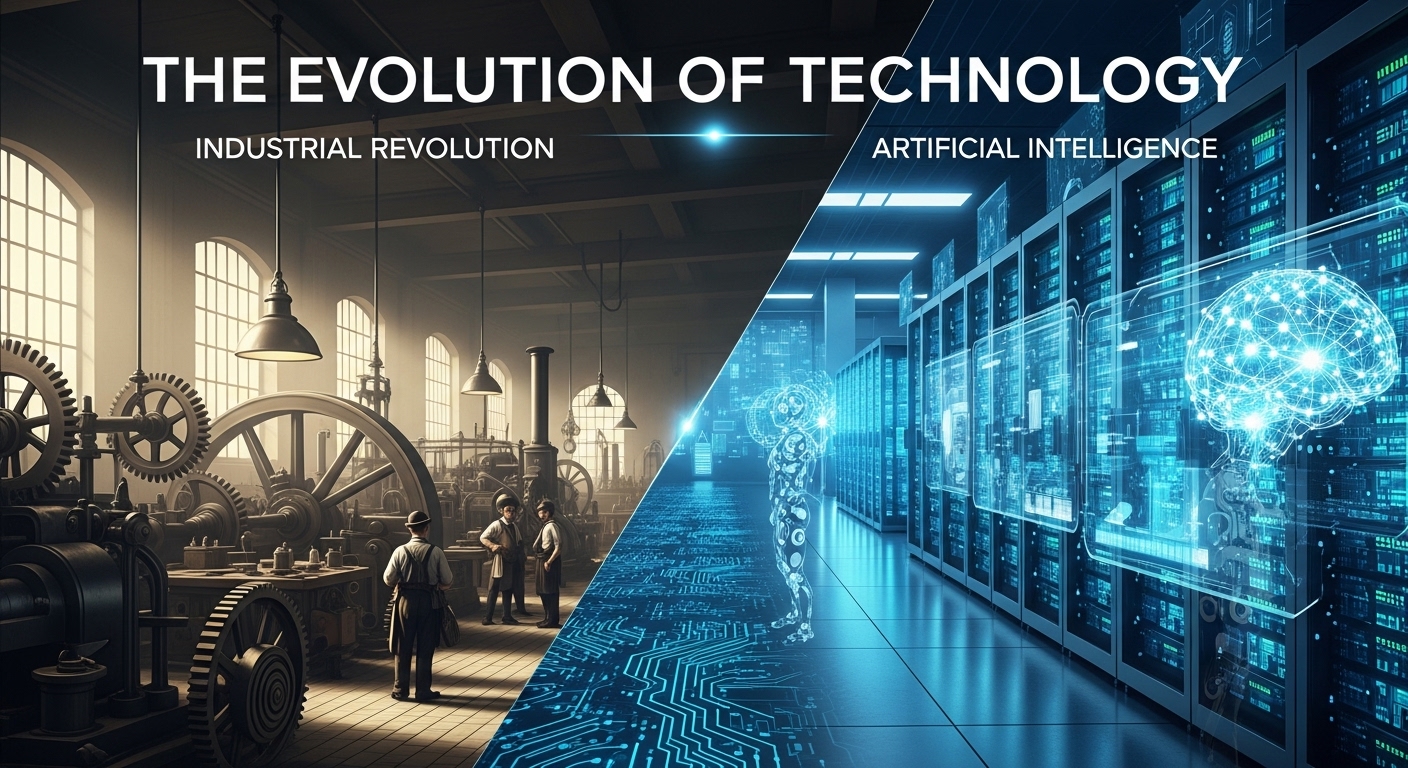
Technology has always been a driving force behind societal change. From the industrial revolution to the rise of the internet, each wave of innovation has radically transformed how we live, work, and interact with the world. As we enter the second half of the 21st century, technology continues to evolve at a breakneck pace. In this blog post, we will delve into some of the most exciting and transformative tech trends that are shaping the future and influencing how businesses, consumers, and entire industries will operate in the years to come.
The Rise of Artificial Intelligence and Machine Learning
Artificial Intelligence (AI) and Machine Learning (ML) are undoubtedly among the most influential and groundbreaking technologies in recent history. While these concepts have been around for decades, they are now at the forefront of innovation, enabling new capabilities across all industries.
AI refers to the simulation of human intelligence processes by machines, and it includes everything from natural language processing (NLP) to computer vision. Machine Learning, a subset of AI, allows computers to learn from data, improving their performance over time without explicit programming.
One of the key drivers behind the rapid adoption of AI and ML is the sheer volume of data being generated. With the explosion of big data, AI and ML algorithms are increasingly being used to identify patterns and insights that were once impossible to detect. Industries such as healthcare, finance, and marketing are already experiencing profound changes, with AI algorithms now used to predict disease outbreaks, automate trading decisions, and create highly personalized advertising campaigns.
In the near future, AI and ML will become even more sophisticated, enabling machines to perform tasks that were once thought to require human intervention. This could revolutionize industries like customer service (via chatbots), autonomous vehicles, and even creative fields like content creation.
The Metaverse: A New Frontier for Digital Interaction
In recent years, the concept of the metaverse has gained significant attention. The metaverse is a collective virtual shared space, created by the convergence of virtually enhanced physical reality and physically persistent virtual worlds. It is a space where people can interact with each other, explore virtual environments, and engage in activities, all in real-time.
Big tech companies like Facebook (now Meta), Microsoft, and Google are heavily investing in the metaverse, with a vision of creating immersive digital worlds where users can work, socialize, shop, and create. Virtual and augmented reality (VR and AR) technologies play a pivotal role in the metaverse, providing the immersive experiences that are central to its vision.
One of the most exciting aspects of the metaverse is its potential to transform how we interact with technology. Rather than relying on traditional interfaces like smartphones or computers, users could step into fully immersive digital worlds where they can interact with virtual objects, avatars, and other people in 3D spaces.
For businesses, the metaverse offers new opportunities for collaboration, marketing, and customer engagement. Virtual storefronts, interactive advertising, and digital events are just a few of the possibilities. However, the metaverse also raises important questions about privacy, data security, and the potential for monopolization by large tech companies. These challenges will need to be addressed as the metaverse continues to evolve.
Blockchain and Cryptocurrencies: Transforming the Financial Landscape
Blockchain technology, best known as the underlying technology behind cryptocurrencies like Bitcoin and Ethereum, has the potential to revolutionize many aspects of society, beyond just the financial sector. Blockchain is essentially a decentralized, distributed ledger that records transactions across many computers in such a way that the registered transactions cannot be altered retroactively.
The most prominent use of blockchain technology today is in the realm of cryptocurrencies, which are digital currencies that operate without the need for a central authority, such as a bank or government. Cryptocurrencies have the potential to disrupt traditional financial systems by providing a more decentralized and secure method of conducting transactions.
However, blockchain’s applications go far beyond cryptocurrency. Industries such as supply chain management, healthcare, and voting systems are exploring how blockchain can be used to improve transparency, traceability, and security. For example, blockchain could enable secure and transparent supply chains, allowing consumers to track the journey of products from manufacturer to retailer. In healthcare, blockchain could provide a more secure way of storing and sharing patient records.
Despite the potential, blockchain technology still faces challenges in terms of scalability, regulation, and adoption. However, as more companies and governments explore its possibilities, blockchain is poised to play a significant role in shaping the future of industries worldwide.
5G: The Next-Generation Wireless Revolution
The advent of 5G technology promises to revolutionize the way we connect to the internet and communicate with one another. 5G is the fifth generation of mobile network technology, offering faster speeds, lower latency, and more reliable connections compared to its predecessors.
One of the key benefits of 5G is its ability to support the massive growth of connected devices, from smartphones and tablets to smart appliances and autonomous vehicles. With 5G, data can be transmitted at lightning-fast speeds, enabling real-time communication and seamless integration of technologies like IoT (Internet of Things) and smart cities.
For consumers, 5G will lead to a host of benefits, such as smoother streaming, faster downloads, and more responsive applications. For businesses, 5G will enable new opportunities for innovation, such as remote surgery, augmented reality experiences, and real-time data analytics.
However, the rollout of 5G has also raised concerns about security and privacy. The increased number of connected devices and the vast amount of data being transmitted could expose networks to new vulnerabilities. As 5G becomes more widespread, it will be important to implement robust security measures to safeguard user data.
Quantum Computing: Unlocking Unimaginable Potential
Quantum computing is another technology that holds the promise of fundamentally changing the world as we know it. Quantum computers use principles of quantum mechanics to process information in a way that is fundamentally different from classical computers.
Whereas traditional computers use binary bits (0s and 1s) to represent data, quantum computers use quantum bits, or qubits, which can represent multiple states simultaneously. This ability to process vast amounts of data in parallel makes quantum computers exponentially more powerful than classical computers for certain types of calculations.
The potential applications of quantum computing are staggering. In fields like cryptography, material science, and drug discovery, quantum computers could solve problems that are currently beyond the reach of even the most powerful supercomputers. For example, quantum computing could help researchers develop new materials, design more efficient solar cells, or simulate complex biological processes to accelerate the discovery of life-saving drugs.
However, quantum computing is still in its early stages. Researchers are working to overcome challenges related to qubit stability, error correction, and scalability. While quantum computers may be decades away from widespread use, their potential to revolutionize industries and solve complex global problems is undeniable.
Conclusion: Embracing the Future of Tech
As we look to the future, it is clear that technology will continue to evolve and shape the way we live and work. From AI and the metaverse to blockchain and quantum computing, the possibilities are vast and exciting. However, with these innovations come new challenges and ethical considerations that must be addressed. Issues like data privacy, cybersecurity, and the impact of automation on jobs will require careful thought and regulation.
Ultimately, the future of tech is about finding ways to harness these innovations for the betterment of society. As individuals, businesses, and governments, we must work together to ensure that these technologies are developed and deployed responsibly. By doing so, we can unlock their full potential and create a more connected, efficient, and equitable world for generations to come.
The tech world is moving faster than ever before, and it’s up to us to stay informed, adaptable, and proactive as we navigate this ever-changing landscape. Whether you’re a tech enthusiast, a business leader, or a casual observer, the future of technology offers limitless opportunities to shape the world in ways we’ve only begun to imagine.