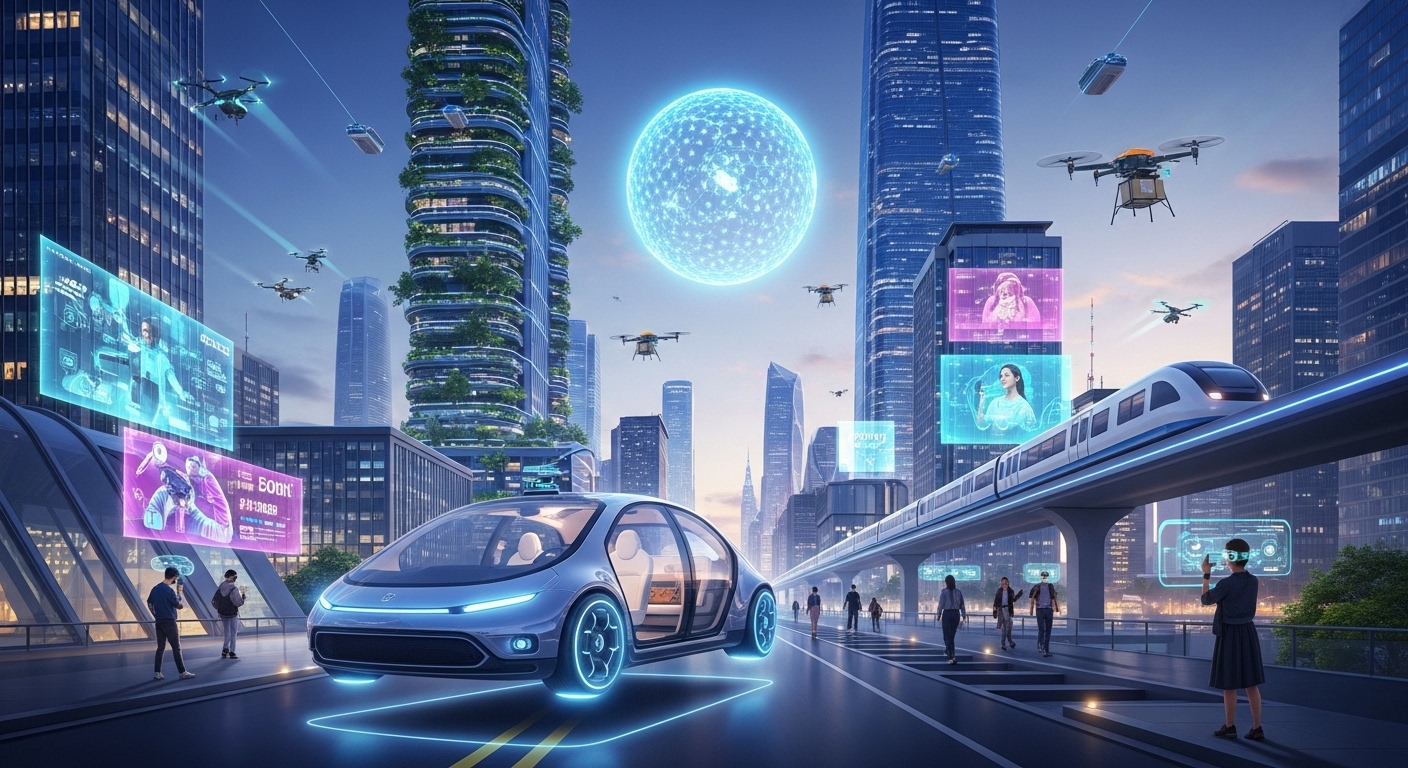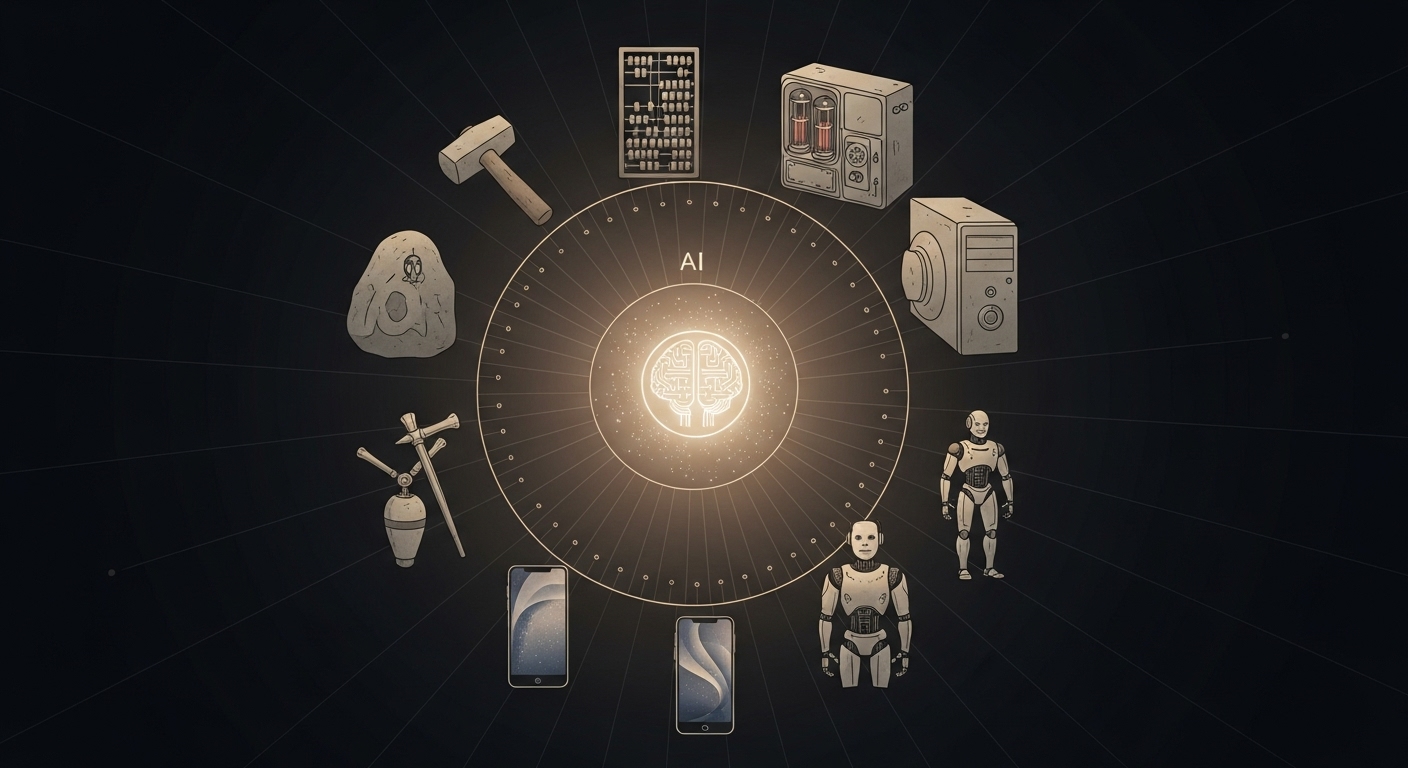
Technology continues to evolve at a pace faster than many of us could have predicted. Each year, groundbreaking innovations push the boundaries of what’s possible, introducing new ways to work, live, and communicate. As we venture further into the 21st century, the tech landscape is expanding into new frontiers that promise to radically alter our daily lives. From artificial intelligence to quantum computing, here’s a look at some of the most exciting technological advancements shaping our future.
Artificial Intelligence: A New Era of Intelligence
Artificial Intelligence (AI) has made remarkable strides in recent years, far beyond the realms of simple automation. AI systems are now capable of learning, adapting, and making complex decisions, often surpassing human capacity in specific tasks. Machine learning, a subset of AI, allows systems to improve over time with data input, making them smarter and more efficient.
AI is transforming various industries, from healthcare to finance, by providing tools that can analyze large sets of data faster and more accurately than humans. In healthcare, AI algorithms are helping doctors diagnose diseases early, analyze medical images, and even suggest personalized treatment plans. The future of AI holds even more promise, with possibilities for improving everyday life through smarter homes, self-driving cars, and AI-powered virtual assistants that understand us more intuitively than ever before.
Quantum Computing: The Future of Processing Power
Quantum computing is on the brink of changing the way we approach complex problems. Unlike traditional computers, which process information in binary form (using bits that are either 0 or 1), quantum computers use quantum bits, or qubits, which can exist in multiple states simultaneously. This allows quantum computers to perform certain calculations exponentially faster than classical systems, making them capable of solving problems that would take centuries to process with today’s technology.
In fields like cryptography, quantum computing could create encryption methods that are virtually unbreakable, revolutionizing online security. Additionally, quantum computers could play a key role in advancements like drug discovery and climate modeling by simulating molecular structures and predicting future outcomes with unparalleled accuracy. While quantum computing is still in its infancy, its potential for transforming industries is immense.
5G Networks: Powering a Hyperconnected World
5G technology is more than just an upgrade from 4G; it is a complete transformation of the way we interact with the internet and each other. With download speeds up to 100 times faster than current networks, 5G will enable real-time data transfer, ultra-low latency, and a seamless internet experience for users around the world. But its impact goes beyond just speed.
One of the most significant benefits of 5G will be its ability to support a massive number of connected devices. This is crucial as the world becomes increasingly dependent on the Internet of Things (IoT), where everything from your refrigerator to your car communicates with each other through the internet. The advent of 5G will make smart cities, autonomous vehicles, and connected healthcare more reliable and efficient. For example, self-driving cars will communicate with each other and infrastructure to reduce traffic accidents and improve transportation efficiency.
Augmented Reality and Virtual Reality: A New Dimension of Interaction
Augmented Reality (AR) and Virtual Reality (VR) are often associated with gaming, but their applications are far-reaching and can transform many aspects of life. AR enhances our real-world environment by overlaying digital information, such as images or text, on top of physical objects. This can provide additional context and enrich user experiences, from retail to healthcare.
In education, AR can bring textbooks to life by displaying interactive models of historical events or biological processes, making learning more engaging and effective. Similarly, VR immerses users in entirely virtual environments, offering simulations for everything from training pilots to exploring distant planets.
The future of AR and VR holds incredible potential. For instance, in remote work, VR could allow employees to collaborate in virtual offices, making geographical distances irrelevant. In retail, AR can let customers try products in their own homes before making a purchase, while VR can create entirely new shopping experiences. The lines between the digital and physical worlds will continue to blur, creating more immersive, personalized interactions.
Blockchain Technology: Redefining Security and Trust
Blockchain technology, originally designed to power cryptocurrencies like Bitcoin, is gaining traction in various other industries due to its ability to provide secure, transparent, and decentralized systems for data management. A blockchain is essentially a digital ledger where transactions are recorded in blocks, which are linked together in a chain. The decentralized nature of blockchain ensures that no single entity has control, making it resistant to tampering and fraud.
Blockchain has the potential to revolutionize industries like supply chain management, healthcare, and finance. In supply chains, blockchain can track the journey of products from manufacturers to consumers, ensuring transparency and reducing fraud. In healthcare, it could provide a secure way to store patient data, giving patients more control over their personal information. Additionally, blockchain’s ability to facilitate secure, fast financial transactions could reshape the global financial system, making cross-border payments cheaper and more efficient.
Renewable Energy Technologies: The Power Shift
With the growing concern over climate change, there is an urgent need to transition to renewable energy sources. Solar, wind, and hydroelectric power are no longer just alternatives—they are becoming mainstream. Technological advancements in renewable energy are driving down costs and improving efficiency, making green energy more accessible than ever before.
Solar panels are becoming more efficient, while wind turbines are generating more power with less maintenance. One of the most promising advancements is in energy storage technology. Improved battery technologies are enabling the storage of surplus energy generated by renewable sources, making it possible to use green energy even when the sun isn’t shining or the wind isn’t blowing.
As more homes and businesses shift toward renewable energy, the global energy infrastructure is beginning to adapt. Innovations in smart grids, which can dynamically adjust to changes in energy demand and supply, will play a crucial role in optimizing energy distribution. This shift toward sustainable energy is essential for mitigating climate change and ensuring a cleaner future for the planet.
Robotics and Automation: Enhancing Human Potential
The field of robotics and automation is advancing rapidly, offering new opportunities to improve efficiency and safety in various industries. From manufacturing to healthcare, robots are taking on tasks that were once too dangerous, repetitive, or tedious for humans to handle.
In manufacturing, robots are already performing precision tasks that enhance production speed and quality. In healthcare, robotic surgery is allowing for more precise, minimally invasive procedures, leading to faster recovery times for patients. Furthermore, robots are playing a critical role in fields like agriculture, helping to automate planting, harvesting, and even monitoring plant health.
While automation is poised to replace certain jobs, it also has the potential to augment human capabilities. By taking over repetitive tasks, robots allow workers to focus on more creative and complex responsibilities, thereby increasing productivity and improving job satisfaction.
Conclusion: Embracing the Tech Revolution
As we move further into the 21st century, technology continues to evolve and shape the world around us. From artificial intelligence and quantum computing to renewable energy and blockchain, the innovations of tomorrow are already beginning to transform industries and society as a whole. As these technologies continue to develop, it’s essential that we harness their potential responsibly, ensuring they are used to benefit humanity as a whole.
The future of technology holds immense promise, offering solutions to some of the world’s most pressing challenges. By embracing these innovations, we can create a more connected, sustainable, and efficient world—one where technology serves as a force for good. The tech horizon is filled with endless possibilities, and the journey has only just begun.