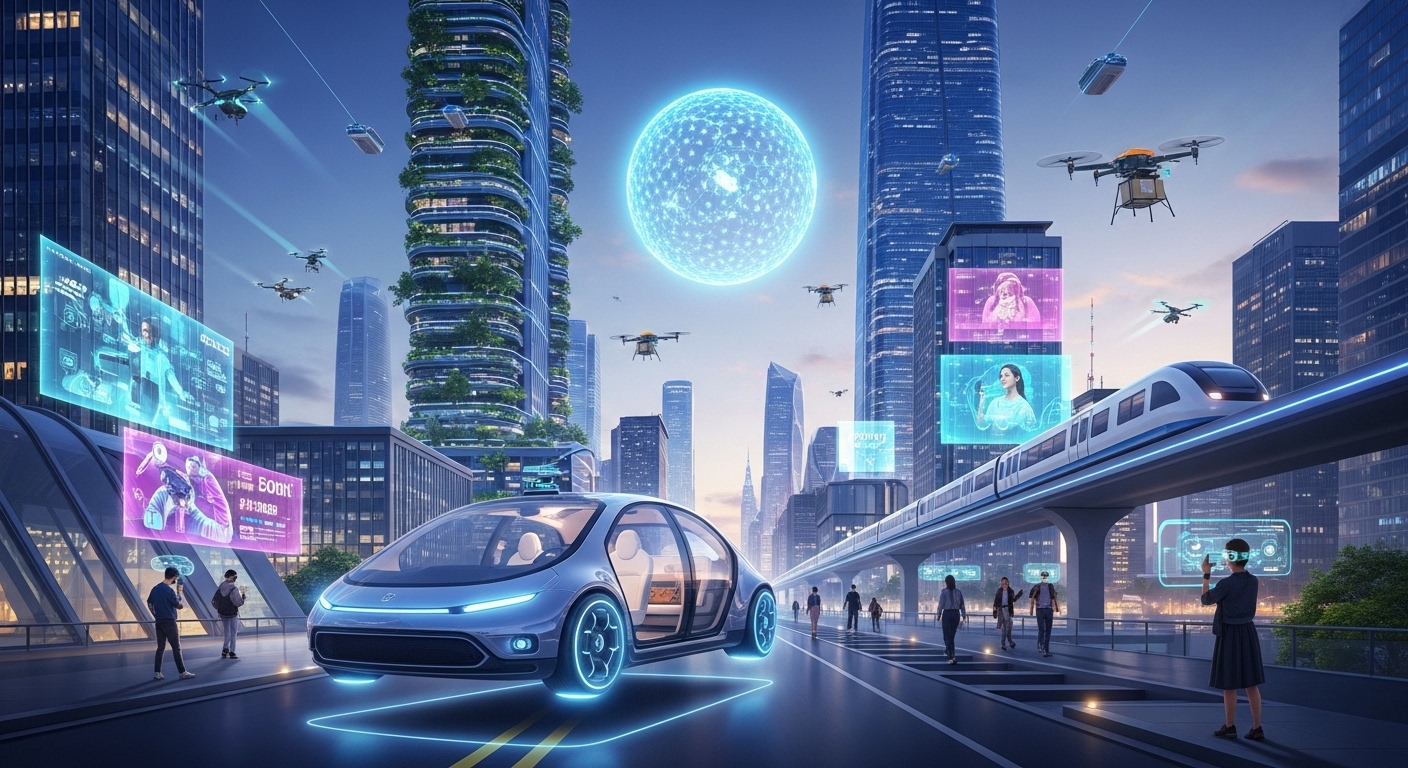
In recent years, the rapid development of artificial intelligence (AI) has become one of the most transformative forces in the world of technology. What was once the realm of science fiction is now at the forefront of technological advancements, influencing a multitude of industries and changing the way we live, work, and interact with the world around us. From AI-powered chatbots to self-driving cars, artificial intelligence has captured the imagination of technologists, entrepreneurs, and consumers alike.
As we stand on the brink of an AI-driven revolution, it’s important to understand how this technology is reshaping the tech landscape and its far-reaching implications for the future. In this blog post, we’ll explore the current state of AI, its potential applications, challenges, and the ethical considerations surrounding this transformative technology.
The Evolution of Artificial Intelligence
Artificial intelligence, in its simplest form, refers to the ability of machines to mimic human intelligence. This involves processes such as learning, reasoning, problem-solving, perception, and language understanding. While the idea of AI has existed for centuries, it wasn’t until the mid-20th century that the first serious strides were made in its development.
The inception of AI as a field of study is often attributed to Alan Turing, who proposed the concept of a machine that could simulate any human intelligence. Turing’s vision, combined with the advent of computers, laid the groundwork for AI’s evolution. The development of early algorithms and neural networks in the 1950s and 1960s helped set the stage for future breakthroughs.
In the 21st century, AI began to experience exponential growth, thanks to improvements in computational power, the availability of massive datasets, and advances in machine learning techniques. The rise of deep learning, a subset of machine learning, allowed AI systems to analyze large datasets and make more accurate predictions. This paved the way for the AI revolution we’re witnessing today.
The Key Technologies Behind AI
Artificial intelligence is not a single technology, but rather a combination of various disciplines that work together to create intelligent systems. Let’s take a closer look at some of the key technologies driving the AI boom:
Machine Learning
At the heart of modern AI lies machine learning (ML), a subset of AI that allows systems to learn from data without being explicitly programmed. ML algorithms analyze patterns in large datasets and use this information to make predictions or decisions. One of the most popular approaches to machine learning is supervised learning, where algorithms are trained on labeled data. Other techniques, such as unsupervised learning and reinforcement learning, allow AI systems to learn from unstructured data or by interacting with their environment.
Natural Language Processing (NLP)
Natural language processing is the AI technology that enables machines to understand and generate human language. NLP is used in applications such as virtual assistants (like Siri and Alexa), language translation, sentiment analysis, and chatbots. By analyzing text and speech, NLP algorithms can interpret meaning, context, and intent, allowing for more natural and human-like interactions with machines.
Computer Vision
Computer vision is another essential technology within AI that enables machines to interpret and understand visual information. This field involves using algorithms to analyze images, videos, and other visual data to extract useful information. Computer vision has numerous applications, including facial recognition, object detection, autonomous vehicles, and medical imaging.
Robotics
Robotics is a branch of AI focused on creating machines that can perform tasks autonomously or semi-autonomously. Robots are increasingly being used in industries like manufacturing, healthcare, and logistics to perform repetitive or dangerous tasks with greater efficiency and accuracy. Advances in AI and robotics are also making it possible for robots to interact with humans more naturally, which has significant implications for sectors like elder care and customer service.
Real-World Applications of AI
Artificial intelligence is no longer just a theoretical concept; it is being applied across various industries, bringing about fundamental changes in how businesses operate and how people live. Here are some of the most impactful applications of AI:
Healthcare
One of the most promising areas for AI is healthcare. From diagnosing diseases to predicting patient outcomes, AI is enhancing the ability of medical professionals to make more accurate decisions. Machine learning algorithms can analyze medical images, such as X-rays and MRIs, to detect early signs of conditions like cancer, heart disease, and neurological disorders. AI is also being used to develop personalized treatment plans based on a patient’s unique genetic makeup and medical history.
Additionally, AI-powered chatbots are being used to triage patients, provide health advice, and schedule appointments. These systems help alleviate the strain on healthcare providers, allowing them to focus on more complex cases.
Autonomous Vehicles
Self-driving cars are one of the most talked-about applications of AI. Autonomous vehicles use a combination of AI technologies, including computer vision, machine learning, and sensor fusion, to navigate and operate without human intervention. Companies like Tesla, Waymo, and Uber are at the forefront of developing autonomous driving technologies, with the goal of reducing traffic accidents, improving fuel efficiency, and transforming transportation systems.
While fully autonomous vehicles are not yet commonplace, AI is already being used in semi-autonomous driving systems, such as Tesla’s Autopilot, which assists with tasks like lane-keeping and adaptive cruise control.
Finance and Banking
In the finance sector, AI is revolutionizing everything from fraud detection to investment strategies. AI algorithms can analyze vast amounts of financial data in real-time, identifying patterns and anomalies that human analysts might miss. This helps financial institutions detect fraudulent transactions, assess credit risk, and optimize trading strategies.
AI-powered robo-advisors are also becoming increasingly popular, providing automated investment advice based on an individual’s risk tolerance and financial goals. These platforms use machine learning to continuously refine their recommendations, offering a more personalized approach to wealth management.
Customer Service and Support
AI-powered chatbots and virtual assistants are transforming the customer service industry. By using natural language processing and machine learning, these AI systems can understand and respond to customer inquiries in real-time, offering support 24/7. This not only improves the customer experience but also reduces the need for human agents to handle repetitive or simple queries.
More advanced AI systems are even capable of understanding the emotional tone of a customer’s message, allowing for more empathetic and effective responses.
The Challenges of AI
While the potential benefits of AI are immense, the technology also faces several challenges that need to be addressed before it can fully realize its potential. These challenges include:
Data Privacy and Security
AI systems rely on vast amounts of data to learn and make decisions. However, this raises concerns about data privacy and security. Sensitive information, such as personal health data or financial records, can be vulnerable to breaches if not properly protected. Ensuring that AI systems are transparent and secure is essential for gaining public trust and preventing misuse.
Bias and Fairness
AI systems can sometimes inherit biases from the data they are trained on. If the training data contains biased or unrepresentative information, the AI may produce unfair or discriminatory outcomes. This is particularly concerning in areas like hiring, law enforcement, and lending, where biased AI systems could perpetuate inequality.
Addressing AI bias is an ongoing challenge that requires diverse and representative data, as well as constant monitoring and testing of AI models to ensure they operate fairly.
Ethical and Social Implications
The rise of AI also raises important ethical questions. For example, as AI systems become more autonomous, how do we ensure they make ethical decisions? What happens when AI systems displace jobs, and how do we address the economic and social impacts of automation? These are complex issues that require collaboration between technologists, policymakers, and ethicists to ensure that AI is developed and used responsibly.
The Future of AI
Looking ahead, the future of AI holds exciting possibilities. As AI continues to evolve, we can expect even more sophisticated systems capable of performing a wider range of tasks. One of the most exciting areas of development is artificial general intelligence (AGI), which refers to machines that can understand and perform any intellectual task that a human can do. While AGI is still a distant goal, progress in areas like reinforcement learning and neural networks suggests that we may one day see machines that can think and reason like humans.
Moreover, AI is likely to become more integrated into our daily lives, with applications that extend beyond business and industry into education, entertainment, and even social interactions. As AI systems become more advanced, it will be essential to ensure that they align with human values and benefit society as a whole.
Conclusion
Artificial intelligence is already transforming the world in profound ways, and its impact on the tech landscape will only continue to grow. From healthcare to autonomous vehicles to finance, AI is improving efficiency, enhancing decision-making, and creating new opportunities. However, the rapid pace of AI development also presents challenges related to privacy, bias, and ethics that must be addressed.
As we move forward, it’s crucial that we navigate the complexities of AI with a thoughtful and responsible approach, ensuring that its benefits are realized while minimizing potential risks. The future of AI is undoubtedly exciting, and its potential to shape the world in positive ways is limitless. By embracing the technology’s possibilities and addressing its challenges, we can help create a future where AI works for the greater good.